Bad Bunny Half-Time Show Should Make White People Reckon With Their Lost Roots
I am writing to you all as Béarla, English, because that was the language which was violently given to us.

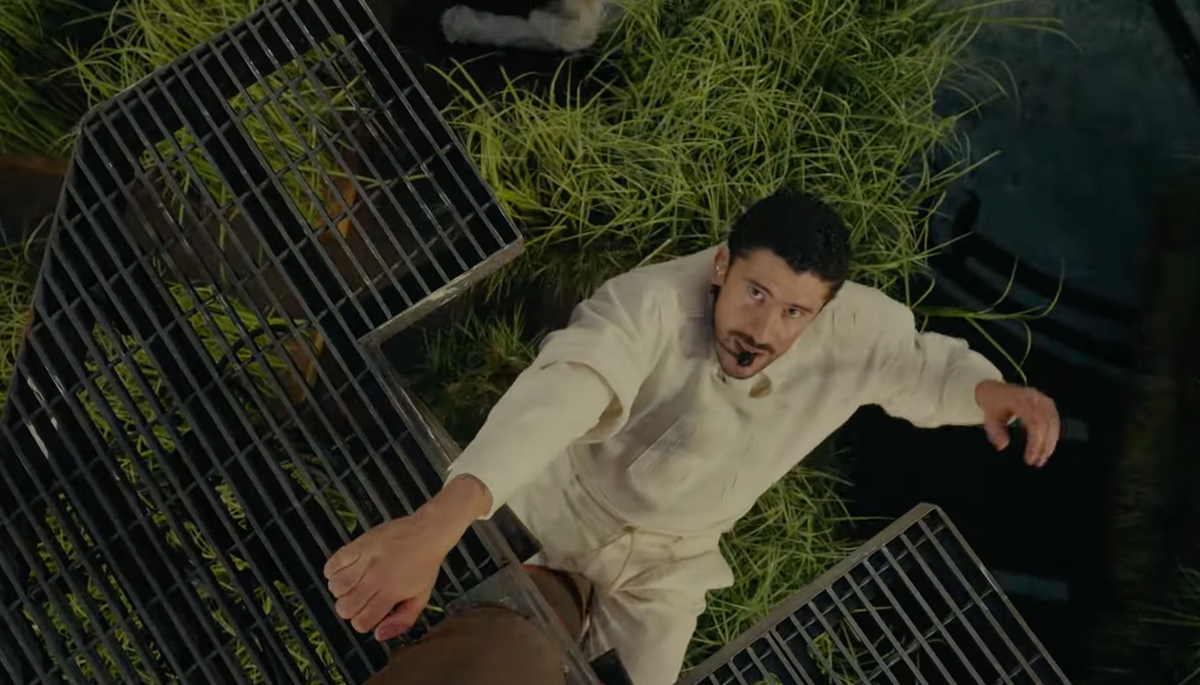
Bad Bunny’s performance at “the Big Game” took me back home. I don’t think many white people from back home would agree with me, and in fact, would find that to be an insult. Even as my hometown has exploded with development (when I was growing up we had maybe two sit-down chain restaurants—Sonny’s BBQ and Golden Corral), the refrains of “and no one speaks English anymore” have not abated, and their echoes reach every corner of this country.
I want to talk to those white folks from a place of understanding. In the past, I have been not-so-gentle in my approaches to speaking on these matters, which while warranted, are not always helpful. None of the Facebook arguments I have had with family, friends, and friends of family have ever changed any of their minds on any matters of social justice. But I think as we watch increasing violence at home on our phone screens, I have seen some beginning to question their own views. Fáilte, a chairde. Welcome, friends. You’re starting a journey that I began some time ago, and I would be lying if I said it wasn’t messy as fuck. Much to my embarrassment, I did not spring from the womb with perfectly formed theories of liberation, anti-racism, or anything else, as much as I would like to pretend I did.
I grew up in Miami, or rather a very small town south of Miami that very few people (unless you’re local) would know by name. My familial history there spans centuries that begin in other Caribbean islands before the Florida Keys. As a child, my ears were filled with Spanish and my arms full of avocadoes from my granny’s backyard tree. I spent many days riding shotgun in my dad’s dusty pickup that always had the heat on even in the summer as we rode up and down rows of pole beans, okra, and tomatoes. I knew the word Immokalee on my tongue before I ever knew who the Coalition of Immokalee Workers were, and their labor struggle which would prevent tomatoes from coming into our local Wendy’s. At middle school dances, my friends and I gyrated to “Gasolina,” the difference being that between us and suburban kids doing it, most of us were not white. I couldn’t understand the words, but I knew music that my body wanted to move to.
What you have to understand about this town is that it was largely agricultural, it still is, but not the way I remember it. Most people who lived there were very wealthy white farm heads, nonwhite immigrant farmworkers and other working class people. (I won’t go into the various ebb and flows of my own family’s status here.) I went to high school in South Miami where the school buses wouldn’t even come pick me up and all my friends told me it was too far to hang out.
I am writing to you all as Béarla, English, because that was the language which was violently given to us. Yes, even us white assimilated Americans. Depending on your family ancestry, it is likely that your family didn’t speak English until recent history.
To use an example, both sides of my family are European immigrants of the last 100 years, portions of which had their tongues overwritten in order to assimilate to life here in the United States. The story told to me as a child was that my Swedish great-grandparents, that escaped starvation in their country, simply wanted to communicate in secret, and so their children did not learn this language. I don't know why the Polish side (forced here when Poland was chopped up by other countries like butchered meat) broke the chain of speaking our language. What I do know is that I have lost so much by not knowing the languages of my ancestors—stories, connection, and culture. Now, I must go on a recovery mission to restore the part of myself I did not know was cut from me. Sínead O’Connor sums it up quite well in her song “Famine,” lamenting the ways in which English colonialism has endured on the Irish psyche:
They gave us money not to teach our children Irish.
And so we lost our history.
And this is what I think is still hurting me.
Not all of us will have ancestors who were always oppressed. Some of us will have ancestors that did the oppressing. I have some of those, too. British Tories and Canadian French colonizers that have documentation going back to the Middle Ages. Those histories must be reckoned with as well. Part of that is in why I write to you now. I speak as someone healing the many varied wounds of and made by my ancestors. They were also made by colonialism, and have trickled down from the way my parents' parents, and their parents, and so on, parented them into the way I was parented. Understanding that is the way generational curses can be broken.
I would be lying if I hadn’t also grown frustrated with my poor Spanish (and equally as horrible language teachers) to the point of absolute refusal to continue learning it or speak it. I understand some of these feelings now as a form of jealousy wrought upon me by white supremacy and colonialism, from the constant noise filling my ears with fear that one day "our" language may not be the one spoken to us. English is not being taken from any of us, but does not know how to exist unless it is the dominant tongue. It can coexist with others, but has to be taught to.
The dialects of the Americas being spoken in produce packing houses and Publixes, or being sung on our radios with evermore visibility, I think stoke within us a fear that we will be overwritten the way we, as white people participating in white supremacy, overwrite others; The way that has been done to many of us before we were even a thought in our ancestors’ minds.
Irish has a seanfhocal, a proverb, that goes: Tír gan teanga, Tír gan anam. A country without a language is a country without a soul. (Also note that the word for “tongue” and “language” are the same as Gaeilge.) I think this applies to us as individuals as well. When we lose our languages, we lose a part of ourselves. And some of these languages are easier to recover than others. We just have to reach out and want to start that journey.
It should also be understood that there are colonial histories that make Spanish the dominating language in countries like Puerto Rico, and therefore also a colonial language which once sought to eliminate native languages across the Americas. Yet, as white Americans, we don't see this commonality between “us” and “them.” We simply perceive it as a nonwhite language spoken by nonwhite people. So it is a threat.
Even Ricky Martin's appearance at the show with a soulful belting of "Lo Que Le Pasó a Hawaii,” should speak to us across cultural divides as a plea to resist colonialism and a testament to not abandon our roots. As a '90s icon, the height of his career was dictated by the demand that he appeal to a white English-speaking audience and also endure fetishization by that very same audience.
And still, artists like Bad Bunny and Martin can make art in this language with joy in their hearts, making it a source of pride and culture. Meanwhile, at the Turning Point USA alternate half-time show, Lee Brice can only sing about how hard it is to be “country”—All he wants to do is catch a fish, drive a truck, drink his beer. How can we not be jealous when we see such a rich celebration of culture and language (in spite of neocolonialism) on television, and flip the channel to such a hollow expression of the Southern country experience which is so multicultural and multifaceted?
Like I said, growing up, I physically straddled rural farm land and the urban town proper. In the morning, I was taken to school in the heart of South Miami, where it wasn't whiter than the schools closer to home. In the afternoons, my sister and I drove country roads by ourselves to take care of our horses. On the weekends, we rode up and down the state rodeoing and showing horses. These two worlds can never be unwound from each other in my heart.
It's not Brown people taking our languages, our cultures, our jobs, and whatever else it is that the powers that be want to tell us they’re taking. We (white people) have already done that to each other. We have subjugated one another before we exported the practice to nonwhite parts of the world. We practiced on each other, and we continue to do so when we insist there is some homogenous cishet, Anglophone white American way of being. It’s simply not true, but we’re made to believe it is because then those at the top can divide us from each other. Don’t let them divide us anymore. We have much more in common than uncommon.
So when I see Bad Bunny on a football field singing in Spanish among sugarcane and a bodega, I am taken back home, to a middle school dance floor where I learned to move my hips from my Latinx friends, to my dad’s pickup and him somehow managing to communicate across language barriers, my best friend’s house where we ate mofongo every year on the day after Thanksgiving. I don't need to understand what he's singing to understand the emotion. Instead of jealousy, I am sad for all we have lost because of colonialism, but ecstatic that I am on a journey of discovery about myself, my ancestors. As Irish singer Hozier sings in “Butchered Tongue”:
You may never know your fortune
Until the distance has been shown between what is lost forever
And what can still be known.
We all have butchered tongues with which we speak.
Grá Mór,
Sam
Who Gives a Focal is a reader-supported publication, which cannot exist without readers like you. We are just getting started and would love for you to support us in our trial months today if you like what we do.