"The Two Towers" Asks Us to Relate to Each Other to Meet What's Ahead
Saruman and Sauron don’t want you to call for Gondor’s aid because if you don’t they can run roughshod over us all.

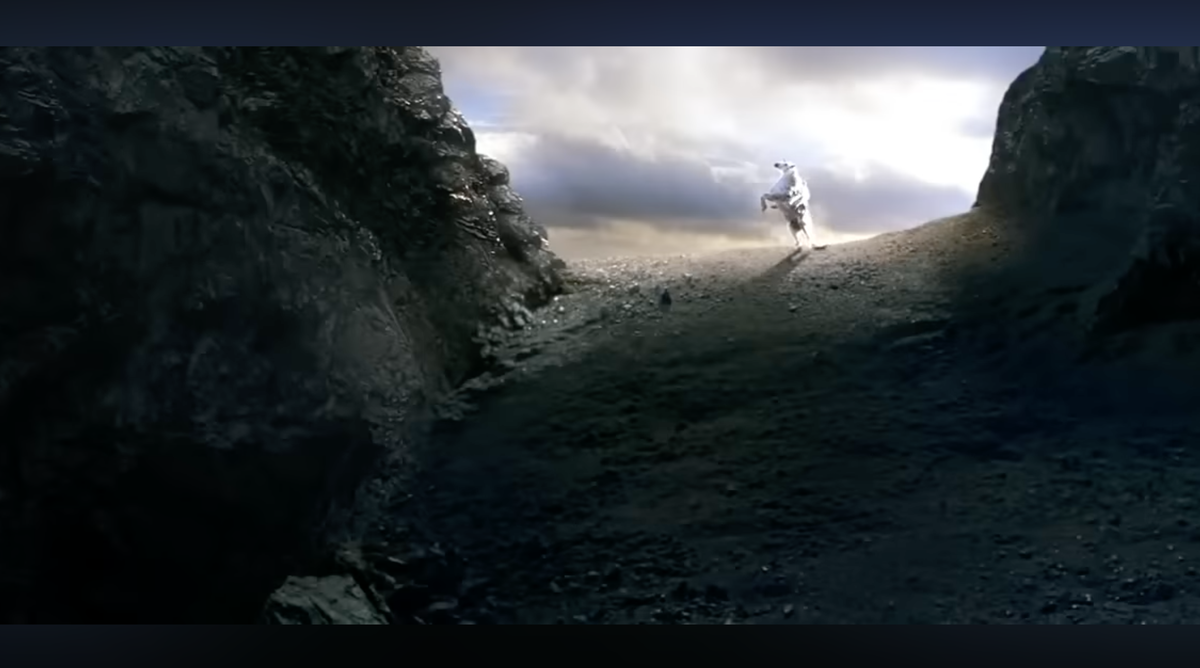
For some reason, I always unconsciously manage to do a rewatch of the Lord of the Rings in the winter. (A friend told me recently that the adventure is in fact in full swing around this time of year.) In these times, I especially need stories in which the good guys win. But The Lord of the Rings isn’t just a good-guys-win story, or even a bog-standard hero’s journey, though it is often held up as the progenitor of many heroes’ tales.
Heroic stories, like those in most fantasy or in comics; tales of superheroes and magicians that use their power to denounce evil are often soothing to our souls. Someone with power will come and save the world. I think these are fine things to consume, but ultimately, it is the actions of the smallfolk, that make a difference. And that is the heart of The Lord of the Rings. It’s not a story about Gandalf using his magic to destroy the Ring, or about slaying Sauron in an epic swordfight between him and the one true king of Gondor. It’s about the smallfolk, the hobbit Frodo with a singular task, and those who find common cause with him and love him.
It's a piece of media I return to over and over again when I am feeling hopeless because it is a story that has continues to resonate nearly 75 years after its original publication. J.R.R. Tolkien writes of his purpose in the foreward to the second edition of the books, “The prime motive was the desire of a tale-teller to try his hand at a really long story … amuse [readers], delight them … or deeply move them…. It is neither allegorical nor topical.” He insists that, despite his involvement in both World Wars, that the story was written “long before the foreshadow of 1939.” He even says that had the story been a true allegory, the events would have been much different in their unfolding.
Regardless of the story not being an intentional allegory, I find more of it every time I enjoy it, particularly “The Two Towers,” where the crux of the tale is told in my opinion. It’s where a broken Fellowship of the Ring encounters struggle, and where the reality that they alone cannot prevent the devastation about to wreak havoc on Middle-earth sets in. It’s where heroic fantasies told to them as children are rewritten. There is no one coming to save us, we must save ourselves. It’s a journey to repair relationships between peoples, a journey to solidarity.
The old world will burn in the fires of industry. The forests will fall. A new order will rise. We will drive the machine of war with the sword and the spear and the iron fist of the Orc. We have only to remove those who oppose us.
These are the words that set the stage within the first 15-minutes of “The Two Towers.” In the subsequent scene, the White Wizard Saruman rides out to the Wildmen of Dunland and encourages a mob, which will join his army of Orcs in laying waste to Rohan. He tells them that the horsemen took their lands, and foments hatred and division so that they will “take back the land they stole from you. Burn every village!”
Does this sound familiar?
Relationships and coalition-making are what drive the story of “The Two Towers.” It’s something that Saruman understands from the beginning—divide, recruit, and conquer. He manages to do it much easier (by wielding fear) than the members of the Fellowship, who have a hell of a time trying to rally anyone to their cause to save Middle-earth from Sauron.
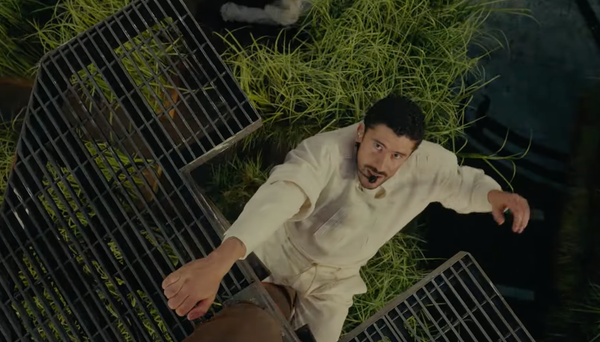
Pippin, having lost hope in convincing the Ents to combat Sauron’s forces says to Merry, “It’s too big for us. What can we do in the end? We've got the Shire.” To which Merry replies, “The fires of Isengard will spread. The woods of Tuckborough and Buckland will burn ... There won't be a Shire.” This rouses Pippin and he devises a clever ruse to persuade Treebeard to take them in the opposite direction of the Shire and toward Isengard. Upon seeing the destruction of the forest and other Entish folk, Treebeard and his kin descend on Isengard like Luddites: destroying dams, weaponry, and machinery in a devastating blow to Sauron’s war-making. "Many of these trees were my friends," says Treebeard. "Creatures I had known through nut and acorn."
These acts are not possible without the efforts of the Hobbits and their devotion to Frodo. But many folk on this adventure do not know of Frodo. His mission must be kept secret so as not to draw the Eye of Sauron as the Dark Lord searches for the One Ring. He is also a Hobbit, which it is said repeatedly that most people of Middle-earth barely concern themselves with Hobbits. Sauron himself ignores their existence entirely until he is made aware of their use in finding the Ring. And so the Ents, like most people in "The Two Towers," must be reminded of their love for other things in order to act in the interest of Middle-earth.
Meanwhile, with the Riders of Rohan scattered due to Saruman’s efforts to divide them from Théoden, King of Rohan, the people of Edoras are left undefended. As they seek shelter in Helms Deep, a haphazard militia is thrown together of those that remain. “Some have seen too many winters” or “too few.”
The battles, especially the one of Helms Deep, are what most people remember about these films. We want to see ourselves in heroes like Legolas taking out Orcs left and right with his bow, or Gimli swinging his axe, or Aragorn leading a charge. We forget that those are but the smallest portions of the story. The reason they are able to snatch victory from the jaws of defeat is because of the relationships they have with each other and many other people across Middle-earth.
Aragorn is able to give everyone in Helms Deep, including the king, courage even when they are in a very finely laid trap because of the way in which he can relate to them. A young boy with a large greatsword comes to Aragorn and says that the other men say that the fight that is about to begin is hopeless. Aragorn tests the boy's sword and hands it back to him, saying that there is always hope. The scene even takes Legolas aback. "We have trusted you this far, you have not led us astray. Forgive me. I was wrong to despair," the Elf says. But even Aragorn understands that to despair is natural, and not something to ask forgiveness for.
To the king, Aragorn insists Théoden call on friends:
Théoden: And who will come? Elves? Dwarves? We are not so lucky in our friends as you. The old alliances are dead.
Aragorn: Gondor will answer.
Théoden: Gondor? Where was Gondor when the Westfold fell? Where was Gondor when our enemies closed in around us?
It’s bitterness and grudge that keeps Théoden from seeing the wisdom of Aragorn’s words; Aragorn who was raised by the Elves of Rivendell. It’s precisely this connection to the elves, particularly his love for Arwen, that causes Elrond (also without hope) to send a company of archers and soldiers to aid in the Battle of Helms Deep.
What is oft not talked about is the scene with Elrond and Arwen in the context of the greater goings on in the world. On the surface, this scene is between a father and daughter having a typical power struggle regarding the daughter's love for man. For Elves, though, this war has little consequence to them. Most of them are already parting for Valinor by the outbreak of the war. Elrond has much more to lose, being that his only daughter loves a mortal man tied to the quest to destroy the Ring. With the gift of foresight he has already seen the possibility of failure, but he has also seen great joy—the potential of new life. This is not enough for him to believe in the quest anymore, at least not enough to believe his daughter will be safe, and so he insists that Arwen depart for the Grey Havens. He wants to retreat to save his child, like many of us want to do when things get hard. But it is Arwen's adamant hope and love for Aragorn that spurs Elrond to act. "I bring word from Elrond of Rivendell," says Haldir as he approaches with his archers in tow. "An alliance once existed between elves and men. Long ago, we fought and died together."
In the uphill climb of this epic battle, Théoden, too, will fall to despair. “What can men do against such reckless hate?” Once again, Aragorn will rally the king and their men to buy time before Gandalf arrives with the Riders of Rohan to join them. It can give the impression that we must rescue everyone in a big dramatic sweep or throw ourselves onto train tracks. Largely, these are egotistic fancies that keep us paralyzed and unable to act. “Well, if I can’t do that, then I can’t do anything.”
What we need to be looking to is the interconnectedness of all peoples, which saves Middle-earth. If we allow fear and anger trample over our hope, if we are afraid of our neighbors because someone tells us that we should be, we can't build power, and that serves only those that already have all the power. They literally have Palantir, we cannot concede that which makes us human: interconnectivity.
In Chicago and Minneapolis, amid Trump’s Immigration and Customs Enforcement (ICE) onslaught in neighborhoods, everyday people are the ones gathering to protect their neighbors. There are acts that we may consider heroic, but there are also less visible actions that need to be taken for those acts to be made possible. There are children that need to be looked after, meals made, conversations to have. These are the things which build relationships; Relationships that the powers that be do not want you to forge.
Sometimes action is not just throwing yourself at the death machines; Sometimes it’s having a chat with your normally conservative father who is disturbed by the brutality he’s seeing on TV; Sometimes it’s making art in a world that wants to erase human expression and commodify it; Sometimes it’s distracting the Eye of Sauron enough that two little Hobbits can sneak by unseen. Real progress, movements, and resistance are made by everyday people. It’s made up of smallfolk doing what they can.
I wonder often what the point of this newsletter is, and it seems with each day that maybe I’m supposed to be a cheerleader right now, and tell you that Saruman and Sauron don’t want you to call for Gondor’s aid because if you don’t they can run roughshod over us all. But Gondor’s aid is not found in the Democratic establishment, or a particular politician, or police. While unverified stories about police teaming up with locals to combat ICE might soothe our frightened souls, we must remember that ICE and the police are two sides of the same racialized system of policing coin. No solution for one is going to come from the other. We save us.
As I write this, I am preparing for a winter storm here in Texas. The last major storm in 2021 left my family without potable water and power for weeks. But what I do have this time, that I didn’t in 2021, is experience, people, and a store of firewood from an old tree that fell in my yard. It's more than I have ever been able to use, and I can set a sign out front that says “Free Firewood”—a beacon to my neighbors if the power grid fails.
We are seeing a ramping up of war, death-making, mass abandonment by the institutions and systems that we have relied on for very long time. Open war is upon us, whether we would risk it or not. But when I am paralyzed by inaction, or I think all is lost, I try to remember this moment from “The Two Towers”:
“What are we holding on to, Sam?” asks Frodo as the Nazgûl screeches above Osgiliath.
“That there’s some good in this world, Mr. Frodo,” says Samwise. “And it’s worth fighting for.”
Who Gives a Focal is a reader-supported publication, which cannot exist without readers like you. We are just getting started and would love for you to support us in our trial months today if you like what we do.